
How to meal plan with what's already in your kitchen
A practical guide to meal planning with what's already in your fridge and pantry, so you waste less food and only buy what the week actually needs.
Nov 14, 2026 · 5 min read
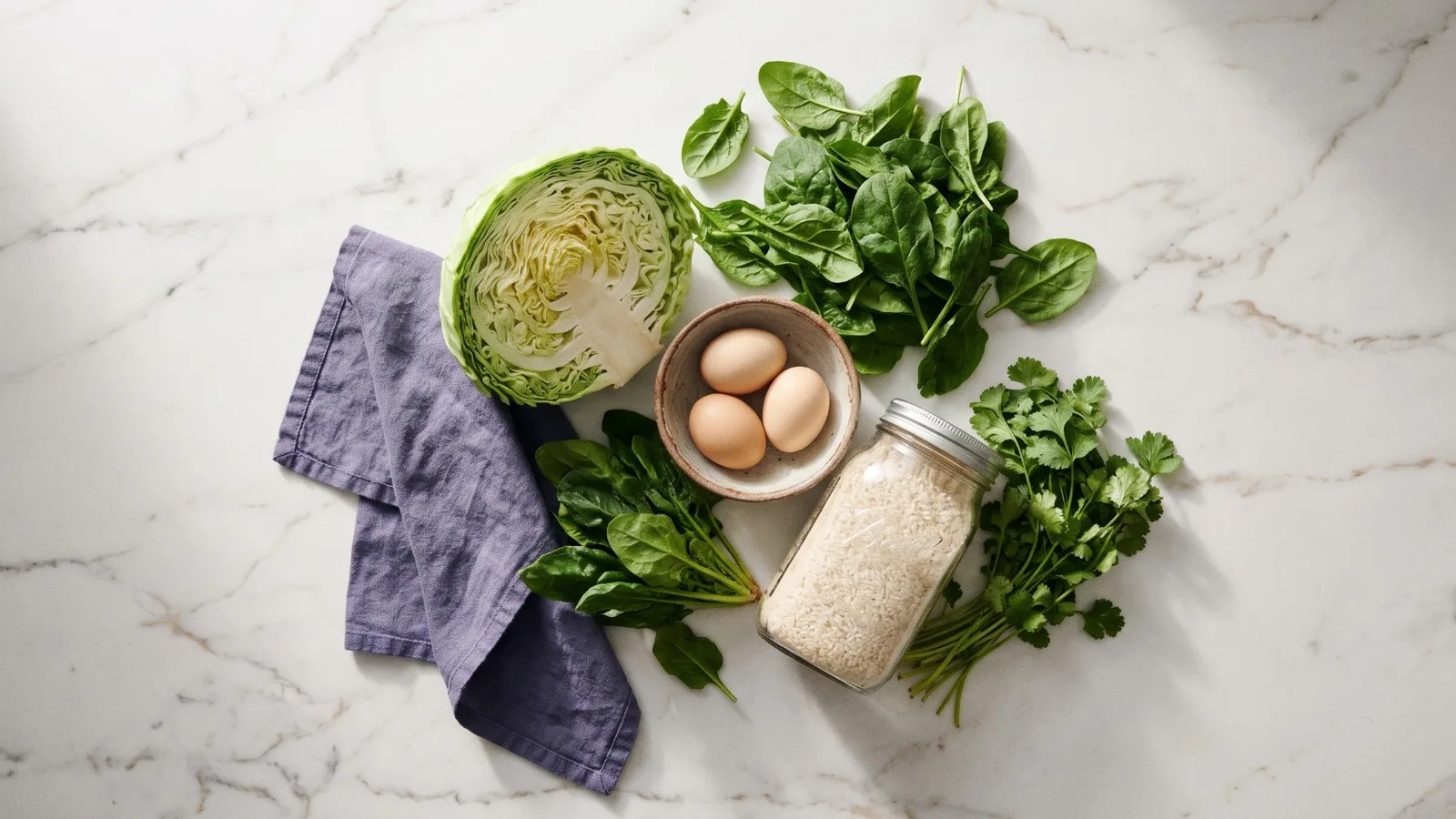
If you've ever bought a second jar of cumin because you couldn't remember the first, or found a bag of spinach gone soft at the back of the fridge, the problem usually isn't the shopping. It's that the plan started at the store instead of in your kitchen. Learning to meal plan with what you have flips that order, and it works with a notebook just as well as with an app.
Why meal plan with what you have
Most meal plans start with recipes. You pick five dinners that sound good, then shop for all of them. That's how you end up with half a bunch of cilantro wilting next to the half bunch you bought last week.
Starting from your kitchen means the food you've already paid for gets used first. The grocery list only fills the gaps, so it's shorter and cheaper. This approach is often called reverse meal planning: instead of choosing recipes and shopping for them, you choose recipes around what you already own.
Take stock in 10 minutes
You don't need a perfect inventory. You need a rough picture of what's there and what needs using soon, so check these three places in order:
- Fridge: Fresh produce, opened jars, leftovers, and anything with a date in the next few days.
- Freezer: Proteins and frozen vegetables that could anchor a meal.
- Pantry shelves: Grains, pasta, canned beans, and sauces. These turn odds and ends into dinner.
Write it down as you go, on paper or in your phone's notes. A list you can see while planning beats a fridge you have to keep opening.
Use up what spoils first
Mark anything that won't last the week: soft herbs, salad greens, berries, opened dairy, and leftovers. Those go into the first two or three dinners. Hardy produce like carrots, cabbage, onions, and potatoes can wait for the second half of the week.
This one habit does most of the work. If the spinach is planned for Monday, it doesn't end up in the bin on Saturday.
Build meals around what needs using
Pick one ingredient that needs using and ask what it goes with. Half a cabbage and some ground pork become a stir-fry. A can of chickpeas, a tired bunch of kale, and leftover rice become a grain bowl.
Then look for meals that share ingredients across the week. If Tuesday's tacos use half the cilantro, put the rest in Thursday's curry. Here's what a week can look like from a fridge with spinach, chicken thighs, half a cabbage, and leftover rice:
| Day | Dinner | Uses up |
|---|---|---|
| Monday | Spinach and feta omelets | Spinach, eggs, feta |
| Tuesday | Chicken tacos | Chicken thighs, half the cilantro, tortillas |
| Wednesday | Fried rice | Leftover rice, frozen peas, eggs |
| Thursday | Chickpea and cabbage curry | Canned chickpeas, cabbage, the rest of the cilantro |
| Friday | Leftovers night | Whatever's left |
Leave room for leftovers
Plan four or five dinners rather than seven. Most weeks bring a takeout night, a dinner invite, or a pot of soup that stretches further than expected.
An unplanned night or two gives leftovers somewhere to go, so they get eaten rather than forgotten.
Write the grocery list last
Go through each planned meal and list only what's missing. Check every ingredient against your inventory before it goes on the list, including staples like oil, garlic, and rice. Those are the easiest to assume you have.
Group the list by store section so you're not doubling back. If something looks good at the store but isn't on the list, ask which planned meal it would replace.
What if your kitchen is nearly empty?
The method still works. Start with the few things you have, even if it's just rice, eggs, and a can of tomatoes, and pick meals that build on them.
Then add a small set of flexible staples, such as onions, garlic, canned beans, and a protein you cook often. Each week after that, you'll have more to plan from.
How IngrediPal plans your week from what you have
Planning from your kitchen is simple on paper. In practice, your inventory goes out of date the moment you cook, and turning a few odd ingredients into a week of meals takes time. That's usually when people slide back to shopping first.
IngrediPal runs the same steps without the clipboard:
- Pantry: Add items by scanning a receipt, a product, or your whole kitchen, so your inventory is ready when you plan.
- Expiry dates: Scans pick up printed use-by dates, and the pantry can show what's expiring soon, so you know which meals to plan first.
- Meal plans: Prioritize My Pantry builds the week around what you have and shows which of your items each meal uses, even if that's just rice, eggs, and tomatoes. Turn on Discover New Recipe for ideas beyond your saved recipes, or pick Budget Friendly to stretch a few ingredients across several meals.
- Grocery list: Your plan becomes a shopping list that skips what you own, merges duplicate ingredients, and updates when you change the plan or servings. Pick the store you're shopping at, and the list shows what to buy there in the order you walk its aisles.
- Recipes: Save recipes from websites, social apps, photos, and cookbooks into one library, so the plan draws on dishes you actually want to cook.
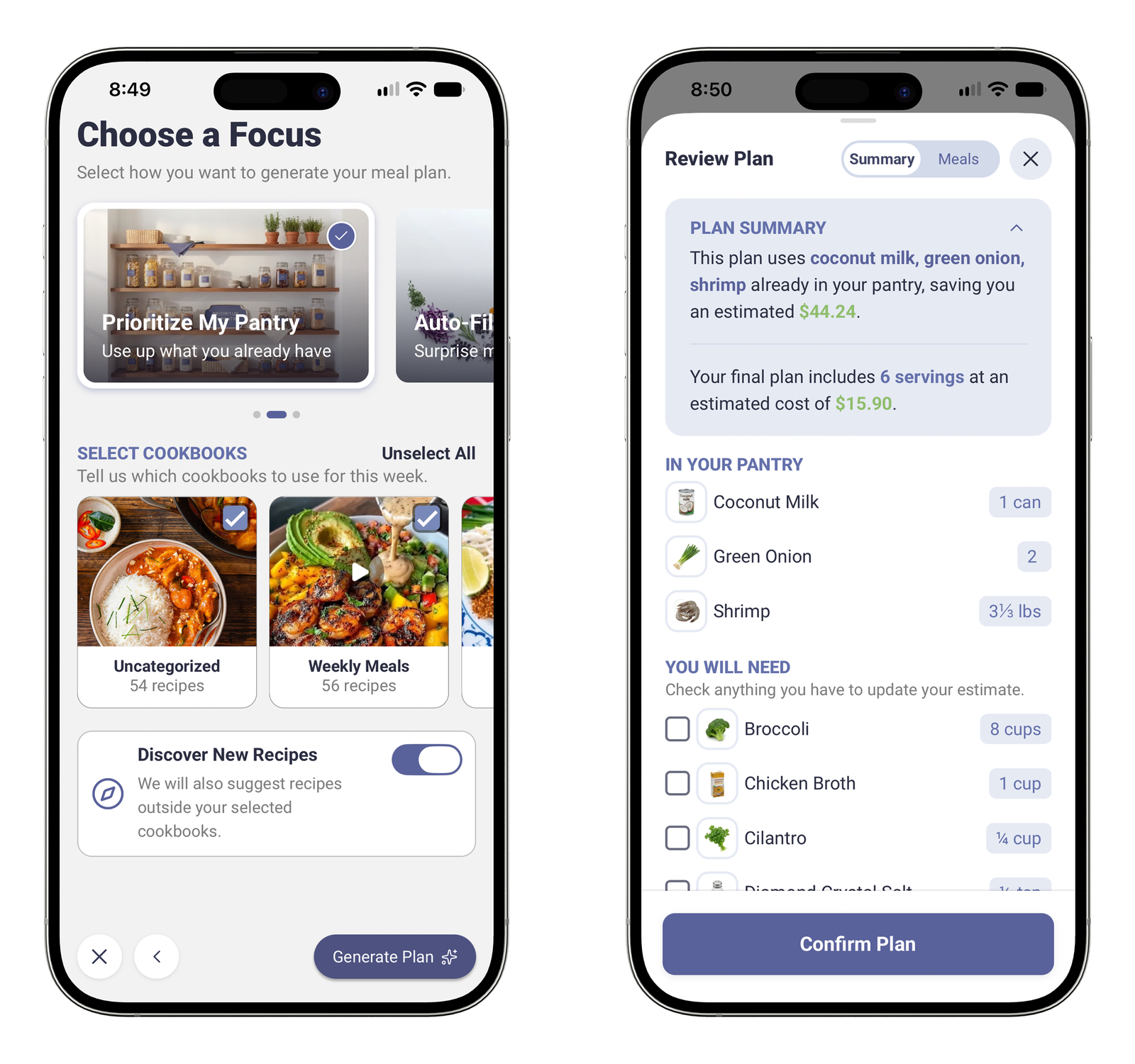
It works on iPhone, Android, and the web, and everything syncs, so the list you build at your desk is on your phone at the store.
Start small this week
You don't have to plan every meal to see a difference. Try three dinners: one built around whatever spoils first, one from the freezer, and one from the pantry shelves.
If those three use up food you'd otherwise have thrown out, you've got the habit. Next week, plan four.